
ETOSHA TRAVEL TIPS
Etosha Climate and Seasons: When to Visit and What to Expect
There is no single best month for every Etosha safari. Dry conditions make water-dependent wildlife easier to locate; greener months transform the landscape, attract seasonal birdlife and bring a different rhythm to the park.
Choose your season by deciding what matters most: concentrated game viewing, comfortable temperatures, green scenery, birding, photography or a quieter style of travel.
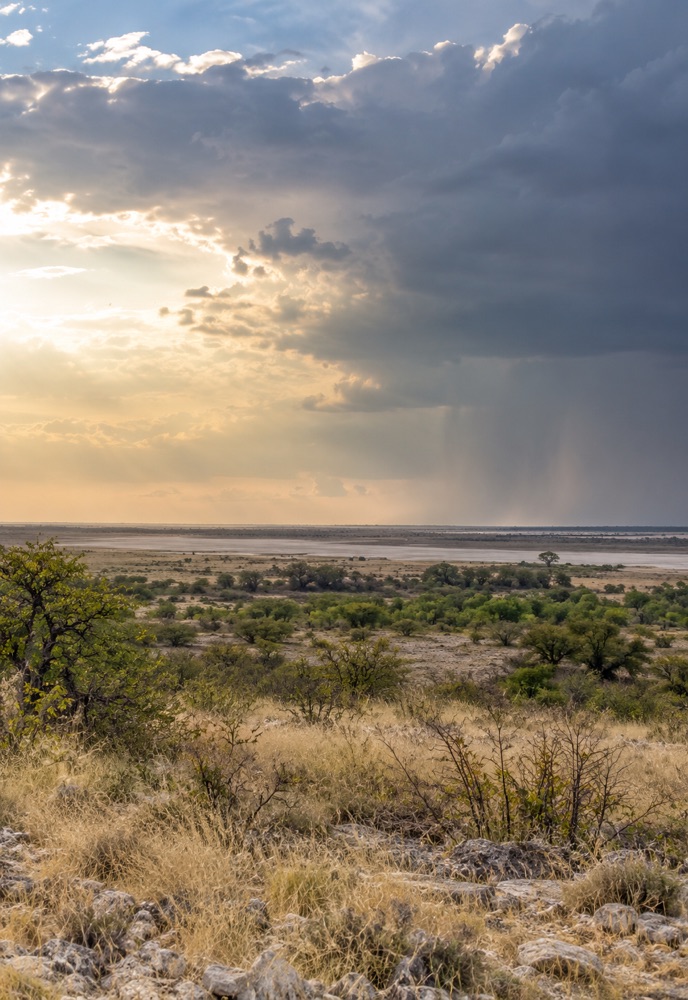
HOW THE SEASONS CHANGE THE SAFARI
Climate shapes where animals move and how easily you can see them
Etosha’s appeal changes through the year. Understanding four basic forces is more useful than choosing a month from a simple ‘best time’ label.
WATER
Scarcity concentrates; abundance disperses
As seasonal surface water disappears, animals rely more heavily on dependable waterholes and movement routes become easier to anticipate. After rain, temporary water and fresh grazing allow wildlife to spread across a much larger landscape.
VEGETATION
Dry openness and green cover reveal different stories
Sparse vegetation can make large mammals easier to detect at distance. Green growth may reduce visibility in places, but it creates striking scenery, supports insects and birds, and makes feeding behaviour more varied.
TEMPERATURE
Comfort changes within the day and across seasons
Dry-season mornings can feel extremely cold in an open vehicle, even when afternoons are mild or warm. Summer can bring intense heat, with cloud, wind and local storms changing conditions quickly.
VARIABILITY
Averages are guidance, not a forecast
Rainfall is irregular in timing and distribution. One area may receive a storm while another remains dry, and a year described as ‘green’ may still contain long hot intervals. Pack and plan for a range rather than one predicted condition.
THE MOST USEFUL RULE
Match expectations to the season, then respond to the conditions you find
A dry month can produce a sudden storm; a rainy-season visit can include bright, rain-free days. Use seasonal patterns to pack and choose priorities, but use local conditions, recent observations and staff advice to plan each day.
DRY-SEASON SAFARI
From cool early starts to hot, dusty concentration at water
The dry season develops gradually. Conditions near its beginning can feel very different from the hotter, more demanding period before the rains return.
MAY–JUNE
A cooling landscape in transition
Fresh growth begins to fade, nights become colder and seasonal water starts receding. Wildlife may not yet be tightly concentrated, but comfortable afternoons and a landscape retaining some colour can create an attractive balance.
JULY–AUGUST
Cold mornings and dependable dry-season patterns
Predawn and early-morning drives can be genuinely cold, especially with wind through an open window or safari vehicle. Dry vegetation and increasing reliance on water can improve visibility, while popular areas may attract more visitors.
SEPTEMBER–OCTOBER
Heat, dust and stronger competition for water
Late dry-season conditions are often hotter and visually stark. Wildlife may gather around reliable water, but both animals and visitors experience greater heat stress. Plan shorter loops, shade, hydration and conservative afternoon timing.
WILDLIFE
Use waterholes as anchors, not the entire plan
Permanent water becomes increasingly important, yet productive encounters also happen along approach routes, open plains and shaded resting areas. Watch the habitat between named stops instead of racing from waterhole to waterhole.
ROADS & DUST
Expect a dry surface and reduced visibility behind traffic
Dust can enter vehicles, settle on equipment and briefly obscure the road. Increase following distance, slow down when vehicles pass and keep cameras or binoculars covered when not in use.
PHOTOGRAPHY
Clear sight lines come with hard light and pale backgrounds
Early and late light can be beautiful, while midday contrast becomes severe. Check exposure carefully around white dust, bright sky and shaded animals, and use the environment to tell the story of survival in a dry landscape.
GREEN-SEASON SAFARI
Heat, local storms and a landscape transformed by rain
The rainy or green season is not continuous rain. It is a hotter, more changeable period when local storms can refresh the landscape and alter wildlife movement very quickly.
FIRST RAINS
Change can happen remarkably fast
The first meaningful storms settle dust, trigger fresh growth and create temporary drinking places. Wildlife begins to spread away from permanent water, while clouds and renewed colour reshape familiar views.
WILDLIFE
Fewer concentrations, more ecological variety
Animals can be harder to predict when water and grazing are widely available. Instead of relying only on waterholes, scan fresh grass, open plains, woodland margins and any area showing recent feeding activity.
BIRDLIFE
A major reason to choose the green season
Seasonal visitors, breeding activity and increased insect life make this a rewarding period for birders. Water in the pan and smaller depressions can create opportunities that simply do not exist in the driest months.
YOUNG ANIMALS
New life changes the behaviour of herds
Calving and the presence of vulnerable young can make group dynamics especially interesting. Watch from a respectful distance, avoid blocking movement and remember that predators may also be drawn to concentrations of young animals.
STORMS
Expect local intensity rather than uniform weather
A storm may bring strong wind, sudden heavy rain and reduced visibility, then move away quickly. Avoid exposed stops, slow down, use headlights where appropriate and never enter flowing water or a flooded crossing.
PHOTOGRAPHY
Work with colour, clouds and softer light
Green backgrounds, reflective water and dramatic skies can produce exceptional images. Protect equipment from rain and dust, watch bright highlights beneath storm clouds and keep a dry cloth and sealed bag accessible.
DO NOT EXPECT EMPTY ROADS OR ALL-DAY RAIN
The green season is a different safari, not an inferior one
Sightings may be less concentrated, but the reward is a living landscape with changing light, birds, young animals and active feeding. Travellers who enjoy interpretation and atmosphere often find this period especially memorable.
MONTH-BY-MONTH PLANNER
A practical calendar for choosing your Etosha dates
These two-month groupings describe likely patterns, not fixed boundaries. Weather and wildlife respond to actual rainfall and temperature rather than the calendar.
NOVEMBER–DECEMBER
Heat builds and the first storms may arrive
Conditions can swing between late-dry-season intensity and sudden green renewal. Prepare for heat, possible thunderstorms and an uneven landscape where recently rained-on areas look completely different from nearby dry ground.
JANUARY–FEBRUARY
Hot, green and highly changeable
This is often the lushest part of the cycle, with birding, insects and young animals adding activity. Wildlife can be widely dispersed, midday heat can be demanding and local storms may influence the day’s route.
MARCH–APRIL
Late rains and a gradual seasonal turn
Green conditions may remain while temperatures begin easing. Roads and water levels depend heavily on recent weather. This can suit travellers who value colour and birdlife but prefer a transition away from peak summer heat.
MAY–JUNE
Cooling days and a drying landscape
Seasonal water recedes, visibility improves and nights become noticeably colder. Wildlife patterns begin tightening around dependable resources, creating a useful compromise between dry-season viewing and remaining landscape colour.
JULY–AUGUST
Cold starts, dry scenery and strong waterhole logic
Expect layers, gloves or a warm jacket for early drives. Daytime conditions are often comfortable, sight lines are generally open and waterholes become increasingly important to daily wildlife movement.
SEPTEMBER–OCTOBER
Very dry conditions and rising heat
Wildlife may be strongly concentrated around reliable water, while dust, glare and afternoon heat increase. This period rewards careful hydration, shade, slower routes and realistic expectations about harsh conditions.
BOOKING REALITY
Your preferred month may also be a popular month
Demand, accommodation availability and visitor numbers can affect the experience as much as temperature. If dates are fixed, book suitable accommodation early; if dates are flexible, consider the transition periods for a broader balance of conditions.
CHOOSE BY PRIORITY
The best season depends on the safari you want
Use your main interest to narrow the calendar, then weigh availability, heat tolerance and the rest of your Namibia itinerary.
CONCENTRATED WILDLIFE
Lean toward the established dry season
Drier months generally make water-dependent movement easier to anticipate and reduce vegetation in many viewing areas. This improves the logic of a self-drive route, but it still cannot guarantee a particular species or sighting.
BIRDING
Prioritise the green season
Seasonal migrants, breeding behaviour, insects and temporary water broaden the birding experience. Bring binoculars, a regional field guide and protection for optics during sudden rain.
GREEN LANDSCAPES
Travel after meaningful rain
The park can change rapidly from pale and dusty to vivid green. Because rainfall is patchy and variable, choose the broader rainy period while accepting that exact scenery cannot be promised in advance.
COMFORTABLE AFTERNOONS
Consider cooler dry-season months
Travellers who struggle with heat may prefer the cooler part of the dry cycle. The trade-off is cold early mornings and nights, so warm layers remain essential.
DRAMATIC PHOTOGRAPHY
Choose the visual story you prefer
Dry months offer dust, open sight lines and concentrated waterhole action. Green months offer colour, clouds, reflections and softer backgrounds. Neither is inherently better; they create different portfolios.
BALANCE & FLEXIBILITY
Look closely at transition months
The periods between the clearest seasonal extremes may combine moderate daytime conditions, changing wildlife patterns and greater visual variety. They also require flexible packing because warm, cold, wet and dry conditions can overlap.
COMFORT & WEATHER READINESS
Prepare for the conditions inside the day—not only the season
Temperature, wind and exposure can change substantially between departure and midday. A flexible clothing and vehicle routine prevents weather from controlling the safari.
COLD STARTS
Layer before leaving camp
In cooler months, an early drive can feel far colder than the forecast suggests because you are sitting still near open windows. Start with a warm outer layer, hat and gloves, then remove layers gradually as the day warms.
AFTERNOON HEAT
Protect hydration and concentration
Heat increases fatigue and can reduce driving attention. Carry more drinking water than you expect to use, take sensible breaks and avoid building a route that forces a long, hurried return during the hottest period.
SUN & GLARE
Treat exposure as an all-season issue
A pale landscape and open vehicle windows increase glare. Use sunscreen, a secure hat, sunglasses and light protective clothing even when the air feels cool.
RAIN & WIND
Keep essential protection within reach
Do not bury rain protection beneath luggage. A compact waterproof layer, dry bag and towel should be accessible from the passenger area so a sudden storm does not require unpacking beside the road.
INSECTS
Match precautions to the season and advice
Insect activity generally increases with warmth and rain. Use suitable repellent, keep screens or doors managed where available and obtain current professional health advice before travel rather than relying on a generic seasonal assumption.
DAILY CHECK
Ask what changed overnight
Recent rain, strong wind, cold or exceptional heat can affect road surfaces and animal movement. Check current conditions with accommodation or park staff before committing to a long loop.
ROADS & WEATHER
Let recent conditions determine the driving plan
Seasonal labels cannot tell you the condition of a particular road today. Recent rain, traffic, maintenance and wind all matter, so combine advance planning with current local information.
AFTER RAIN
Reduce speed before the surface looks difficult
Standing water, soft shoulders and damaged sections may be harder to see than expected. Slow down early, avoid sudden steering or braking and follow any closure or diversion instructions.
FLOWING WATER
Do not test an uncertain crossing
Water depth, current and the condition beneath the surface are difficult to judge from a vehicle. Never enter flowing or flooded sections unless the route is officially confirmed safe and clearly permitted.
DUST
Create space behind other vehicles
Following closely reduces visibility and coats the vehicle and optics in fine dust. Increase distance, avoid overtaking unless conditions are clearly safe and close equipment bags before traffic passes.
STRONG WIND
Expect dust, branches and unstable doors
Wind can reduce visibility, make open doors difficult to control and add significant chill in cooler weather. Park carefully, secure loose items and avoid standing where doors can swing unexpectedly.
ROUTE BUFFER
Weather makes ambitious loops more fragile
A route that only works under perfect conditions is not a good route. Leave time for slower roads, wildlife stops and an alternative return, particularly when storms or extreme heat are possible.
LOCAL INFORMATION
Use same-day advice intelligently
Ask about recent rain, closures and surface conditions, then confirm against official signs and instructions. Another traveller’s experience from yesterday may already be outdated after a local storm.
SEASON-AWARE PACKING
Pack for temperature range, exposure and sudden change
Even a short Etosha visit can include a cold predawn start, bright sun, dust, strong wind and a hot afternoon. The right small items matter more than a large suitcase.
Climate essentials for every itinerary
✓ Light layers that can be added or removed inside the vehicle.
✓ A genuinely warm outer layer for cold, windy morning drives.
✓ Sun protection: hat, sunglasses, sunscreen and covered shoulders.
✓ More drinking water than the shortest route appears to require.
✓ Compact rain protection and a dry bag during changeable months.
✓ Dust protection and safe cleaning supplies for cameras and optics.
✓ Suitable insect repellent and personal health supplies.
✓ Offline weather information, maps and current contact details.
ETOSHA CLIMATE FAQ
Answers to the most common seasonal planning questions
Use these answers to set expectations, then check a current forecast and local park information immediately before and during the trip.
What is the best time to visit Etosha?
For easier wildlife-location logic, many travellers prefer the established dry season, when dependable water becomes more important. Birders, landscape photographers and visitors who enjoy green scenery may prefer the rainy season. The best choice is the one aligned with your main interest and heat tolerance.
When is Etosha hottest?
Heat generally builds toward the end of the dry cycle and remains an important factor through summer. Exact conditions vary, so examine a current forecast and plan water, shade, driving distance and accommodation around the temperatures expected during your actual dates.
Can Etosha be cold?
Yes. Winter and early dry-season mornings can feel extremely cold, particularly in an open vehicle or beside an open window. Bring a warm jacket and layers even if daytime forecasts appear comfortable.
When is the rainy season in Etosha?
Rain is generally associated with the warmer summer part of the year, but its arrival, intensity and distribution vary. Treat the rainy season as a broad planning period rather than a guaranteed start and finish date.
Does it rain all day during the green season?
Not necessarily. Rain often arrives as local showers or thunderstorms separated by dry or sunny intervals, but longer wet spells are possible. A forecast close to the travel date is more useful than assuming every day will follow the same pattern.
Will rain stop me from driving in the park?
Many routes may remain usable, but a strong local storm can create standing water, soft surfaces, reduced visibility or temporary restrictions. Follow current signs and staff instructions, and never enter flooded or flowing water.
Which month is best for wildlife photography?
Dry months can offer open views, dust and waterhole activity; greener months offer colour, clouds, reflections and young animals. Choose according to the visual style you prefer, then prepare for the lighting and equipment protection that season demands.
How reliable is a long-range weather forecast?
It can show broad temperature trends, but local storm timing and rainfall become less certain far in advance. Use seasonal guidance for booking and packing, then refine daily plans with a recent forecast and current local information.
CHOOSE THE SEASON, THEN BUILD THE SAFARI
Turn the seasonal trade-offs into a practical Etosha itinerary
Select accommodation that supports realistic daily loops, pack for the full temperature range and leave enough flexibility for the weather you actually encounter. If you are unsure which dates fit your priorities, ask us to help shape the route.