
PLAN ETOSHA WITH CONFIDENCE
Etosha Travel Tips: Plan a Better Safari
Etosha rewards travellers who prepare well, drive slowly and leave room for the unexpected. This practical planning guide brings the park’s most useful advice into one place, from choosing when to visit and shaping your route to packing the right gear, understanding the rules and making more of every waterhole stop.
Use this page as your starting point, then follow the detailed guides for the part of your trip you are planning. The goal is simple: fewer rushed decisions, more time watching Etosha unfold.
ETOSHA AT A GLANCE
Four things to understand before you plan
Etosha is straightforward to explore, but the quality of your safari depends more on pace and priorities than on how many kilometres you cover.
Allow enough time
Three to four nights gives most first-time visitors a far better chance to settle into the park’s rhythm than a hurried overnight stop.
Think in areas, not checklists
Choose a manageable part of the park each day. Slow loops and patient waterhole stops usually produce a more rewarding safari than racing between distant points.
A standard vehicle often works
In ordinary conditions, the main tourist roads can usually be explored in a conventional vehicle. Drive with the road surface in mind, leave extra braking distance and check local road notices.
The clock matters
Plan every drive around the current gate and camp closing times. Keep a generous return buffer and verify times, fees and notices shortly before travel.
THE DECISIONS THAT SHAPE THE TRIP
Plan the safari before you plan every road
A useful Etosha itinerary starts with four choices: how much time you have, which side of the park fits your wider route, where you want to sleep and how independently you want to travel. Settle these first and the day-by-day detail becomes much easier.
How many days do you need?
One night can show you Etosha, but it rarely lets you experience it. Two nights give you a taste. Three to four nights suit many first visits because they allow several early and late drives, time at different waterholes and room for a quiet day when sightings are slower.
Five nights or more make sense if wildlife photography is central to the trip, if you want to move across more than one part of the park, or if you prefer shorter drives with longer periods of observation. Extra time is not wasted time here; it reduces the pressure to force every day into a highlight reel.
Choose an entry and exit that fit Namibia
Do not treat Etosha as an isolated dot on the map. Your best gate depends on where you are coming from and where you travel next. Visitors approaching from central Namibia often structure the park differently from those combining it with the north, the Caprivi direction or the country’s western landscapes.
A through-route can save backtracking, but only when the driving distances remain realistic. Compare the approaches, gate access and overnight stops before booking the sequence.
Compare routes and gatesStay inside, outside—or combine both
Staying inside the park can place you closer to early starts, late returns and selected camp waterholes. Staying outside may offer a wider choice of lodge styles, meals, activities and levels of comfort. Neither option is automatically better; the right answer depends on your budget, preferred pace and how much time you want to spend at the gate each day.
A split stay can work especially well: use one location for convenient park access and another for a different landscape or lodge experience. Book early when your dates are fixed, particularly for limited room types and popular travel periods.
Explore Etosha accommodationSelf-drive or guided safari?
Etosha is well suited to self-driving for visitors who are comfortable with long days behind the wheel and patient wildlife watching. You control the route, stop when something interests you and decide how long to remain at a waterhole.
A guided drive adds local knowledge, a higher viewing position in many safari vehicles and freedom from navigating. It can be especially valuable at the start of a visit, for solo travellers, or when you want help interpreting tracks, behaviour and habitat. Many people combine both approaches.
Prepare for self-drivingWHEN TO VISIT
Choose the experience, not just the month
There is no single perfect season for every visitor. Conditions change what is easy to see, how the landscape feels, how busy popular areas can become and what you need to pack.
Drier months: concentrated viewing
As natural water becomes scarce, animals may be easier to find around established water sources. Vegetation can be thinner and the viewing logic feels more predictable. Mornings may be surprisingly cold, while dust, bright light and busier waterholes become part of the experience.
This is a strong choice when classic big-game viewing is the priority, but it still rewards patience. A crowded waterhole is not automatically the best waterhole, and sightings are never guaranteed.
Greener months: atmosphere and variety
Rain can transform Etosha’s colour, cloudscapes and birdlife. Animals may spread over a wider area, which can make some sightings less predictable, but the landscape becomes a subject in its own right. Heat, storms, insects and changing road conditions need more attention.
This period can suit repeat visitors, birders, landscape photographers and travellers who value mood and seasonal change as much as a concentrated waterhole spectacle.
A PRACTICAL DAILY RHYTHM
What a well-paced day in Etosha looks like
The best days have structure without becoming rigid. Start prepared, protect the productive hours, slow down when conditions ask you to and leave enough margin to finish safely.
01
Prepare before the gate opens
Fuel, camera batteries, binoculars, water and the day’s first loop should be ready before departure. Early light is valuable; do not spend it reorganising the vehicle.
02
Use the cool morning well
Drive slowly and watch the road margins, open plains and approaches to water. Stop for fresh tracks, alarm calls and the behaviour of other animals—not only for parked vehicles.
03
Let late morning become quieter
As heat builds, shorten the loop or settle at a promising waterhole. Rest, eat and reassess rather than adding distance simply to stay busy.
04
Build the afternoon around a safe return
Choose an afternoon circuit that leaves options to turn back. The best sighting of the day is not worth a rushed drive or a late arrival.
05
End with notes, not just photographs
Mark productive waterholes, unusual behaviour, road conditions and realistic drive times. Tomorrow’s plan will be better because of what you learned today.
First-time visitor checklist
Use this as a final planning check, then open the linked specialist guides where you need more detail.
Confirm your accommodation sequence and the gate that fits each overnight stop.
Check current gate hours, park fees, road notices and reservation requirements close to departure.
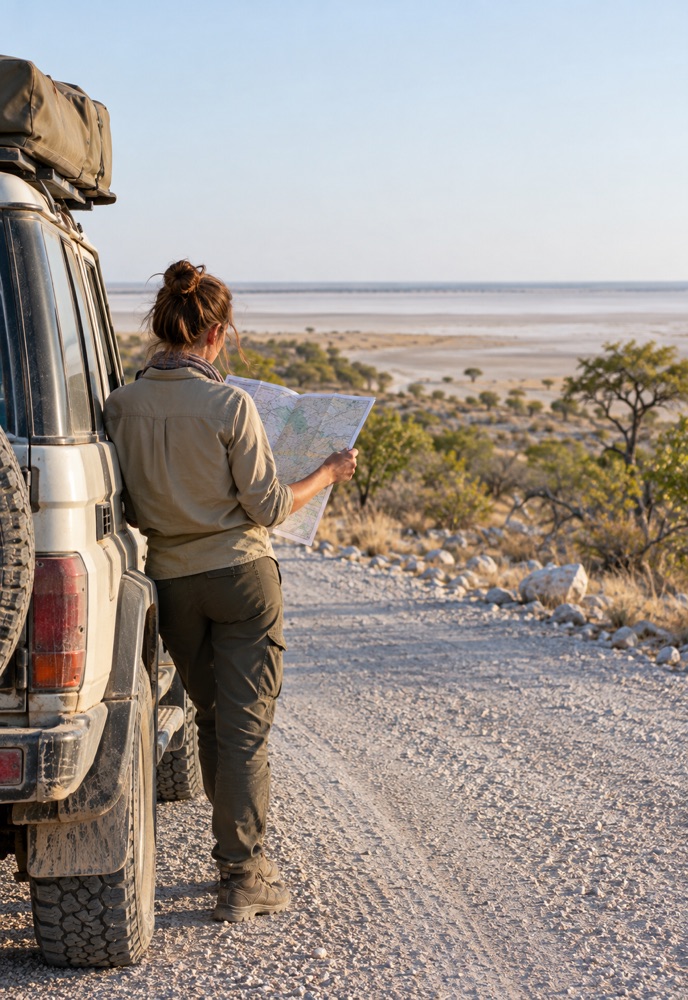
Carry a current map and keep an offline version available when mobile coverage disappears.
Inspect tyres, pressure, spare wheel, tools and fuel range before entering a long driving day.
Pack more drinking water than you expect to use, plus simple food for delays and long waterhole waits.
Keep licences, identity documents, bookings and insurance details organised and easy to reach.
Bring layers for early starts, strong sun protection and sensible insect protection.
Treat every wildlife rule as a safety rule. Leave the vehicle only where it is clearly permitted.
AVOID THE USUAL FRUSTRATIONS
Six common Etosha planning mistakes
Most disappointing days are not caused by a lack of wildlife. They are caused by unrealistic distances, poor preparation or a plan that leaves no room for Etosha to be unpredictable.
Trying to see the whole park at once
Long distances reduce observation time and make late returns more likely. Choose a focused area and let the wildlife set the pace.
Treating every waterhole as a quick stop
A silent waterhole can change in minutes. If the setting, tracks or bird activity look promising, patience may be the best route choice.
Following crowds without reading the scene
Several vehicles can mean a sighting—or simply a convenient stop. Scan the wider landscape and keep making your own decisions.
Underestimating dust, heat and cold
Etosha days can include cold departures, intense sun and fine dust. Comfort affects concentration, driving and how long you can wait well.
Leaving the return too late
Distances take longer than a map suggests when you stop for wildlife. Turn back with a buffer, not at the last mathematically possible moment.
Expecting a guaranteed checklist
Wildlife is not scheduled. A strong safari is built from behaviour, habitat, light and surprise—not only from ticking off famous species.
QUICK ANSWERS
Etosha travel tips: frequently asked questions
These answers cover the questions that shape most first trips. Use them for orientation, then verify time-sensitive information and follow the detailed guides for your final planning.
How many days should I spend in Etosha?
Three to four nights is a strong starting point for a first visit. Two nights can work for a focused introduction, while five or more nights suit photographers, repeat visitors and travellers who want to explore more than one area without rushing.
Do I need a 4x4 for Etosha?
A 4x4 is not normally essential for the main tourist roads in ordinary conditions. A higher-clearance vehicle can add comfort and confidence, especially when surfaces are rough or seasonal weather affects roads. Always follow current road notices and rental conditions.
Can I drive myself around the park?
Yes. Etosha is one of southern Africa’s best-known self-drive safari destinations. Successful self-driving depends on conservative speed, good route planning, enough fuel and water, wildlife awareness and strict attention to gate and camp times.
What is the best time of year to visit?
The answer depends on the safari you want. Drier periods often make waterhole-based viewing more concentrated, while greener periods can bring dramatic skies, birdlife and a transformed landscape. Heat, cold, rain, dust and visitor numbers also influence the experience.
Is it better to stay inside or outside the park?
Inside-park accommodation can simplify early departures, late returns and access to camp waterholes. Outside lodges may offer more variety in style, service and activities. Many itineraries work well with a combination of both.
What should I know about malaria and travel health?
Health guidance can vary with season, route, personal medical history and current public-health advice. Speak to a qualified travel-health professional before departure, use sensible bite prevention and do not rely on a general travel page for individual medical decisions.
Are children allowed on an Etosha safari?
Families can have an excellent Etosha experience, but the plan should match the children’s ages and tolerance for long, quiet drives. Schedule breaks, carry familiar food and water, manage heat carefully and confirm age restrictions for any guided activity directly with the operator.
Where should I check current fees and opening times?
Treat fees, opening hours, access rules and road conditions as time-sensitive. Confirm them with the relevant park or accommodation authority close to travel, even if you have seen older figures in a guide or forum.
TURN THE ADVICE INTO A ROUTE
Ready to plan your Etosha safari?
Start with accommodation and route availability, then use the specialist guides above to refine each day. If the pieces still do not fit, ask for help before locking in transfers and camps.