
ETOSHA TRAVEL TIPS
Driving in Etosha National Park: A Practical Self-Drive Guide
Etosha is one of Africa’s most approachable self-drive safari destinations, but a good day depends on more than following a map. This guide explains how to choose realistic routes, drive safely on gravel, protect your vehicle, behave around wildlife and return before the gates close.
The central principle is simple: plan conservatively, move slowly and leave enough time for the sightings you cannot schedule.
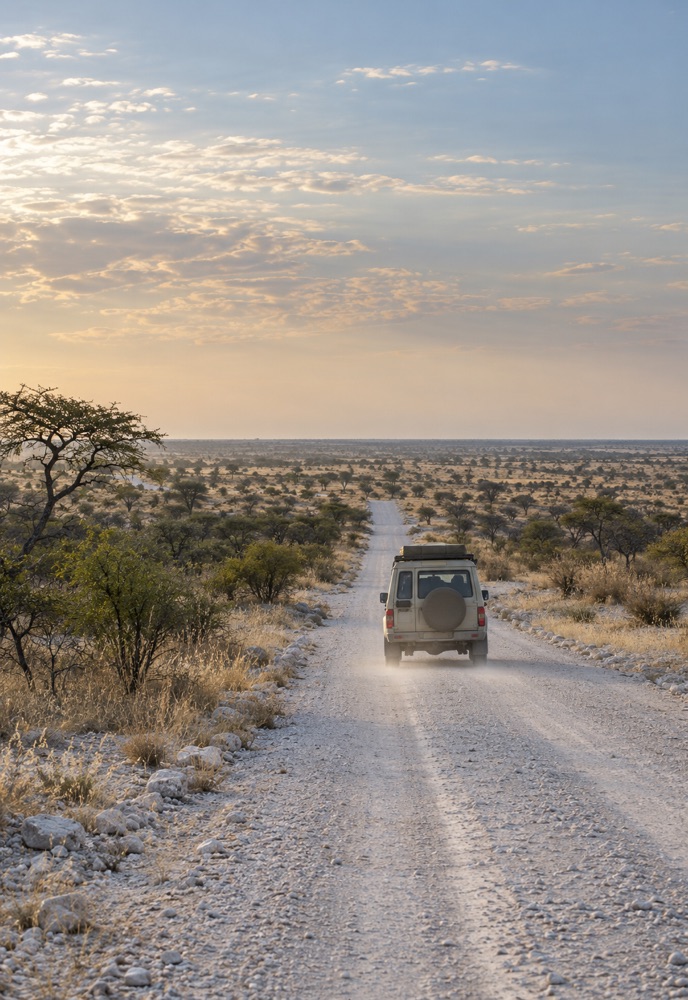
SELF-DRIVING ETOSHA
Can you drive yourself around Etosha?
Yes. Etosha is particularly well suited to independent safari travel. Visitors can follow the public road network in their own or rented vehicle, stop at viewpoints and waterholes, and choose how long to remain at a sighting.
The freedom is valuable, but it comes with responsibility. You must manage the vehicle, route, fuel, time and wildlife safety yourself. A successful self-drive day is measured by calm decisions and good observations—not by the greatest distance covered.
01
Vehicle choice
A conventional vehicle is usually suitable for the main tourist roads in ordinary conditions. A higher-clearance vehicle can improve comfort and visibility, but four-wheel drive is not normally required simply to explore the standard public routes.
02
Road surfaces
Expect long stretches of gravel, loose stones, dust and corrugations. Conditions can change after rain or grading, so respond to the road in front of you rather than assuming yesterday’s advice still applies.
03
Opening and closing times
Gate and camp times can change with the season and operational conditions. Confirm the current schedule shortly before travel and again on arrival. Build your route around a comfortable return margin.
04
Wildlife rules
Stay on authorised roads, obey posted signs and remain inside the vehicle except at clearly designated places. Never use a wildlife sighting as a reason to block traffic, approach too closely or ignore staff instructions.
BUILD A REALISTIC ROUTE
Why route planning matters more than distance
Safari maps can make roads look deceptively manageable. Driving time is only one part of the day; every worthwhile stop changes the schedule. Build flexibility into the route from the beginning.
Plan in hours, not kilometres
A short distance can take a long time when you stop for tracks, birds, a busy waterhole or an animal beside the road. Estimate the driving time, then add generous observation time and a return buffer.
Choose one area for each drive
A focused morning loop is often more productive than collecting distant place names. Select a cluster of roads and waterholes near your camp or gate, then explore it slowly enough to notice what faster vehicles miss.
Treat cross-park days differently
A relocation between camps is both a transfer and a safari. Start early, reduce optional detours and decide in advance which stops are priorities. The aim is to arrive with time in hand, not to squeeze every side road into one day.
Set a turnaround point
Before leaving, identify the latest sensible time to turn back. Adjust it for stops, road condition, changing weather and your actual progress. If the day is running late, shorten the route instead of trying to recover time by driving faster.
VEHICLE AND GRAVEL PREPARATION
Prepare the vehicle before the first game drive
Etosha’s tourist roads are manageable when the vehicle is sound and the driver responds to changing conditions. Small checks completed before departure are far easier than solving a preventable problem beside a wildlife road.
Fuel and range
Start each long drive with a comfortable fuel margin. Availability and payment systems can change, so do not design a route that depends on the last possible refuelling opportunity.
Tyres and spare wheel
Check condition, pressure, spare wheel and the tools supplied with the vehicle. Know where the jack and wheel key are before entering the park.
Rental conditions
Read the agreement for gravel-road use, tyre damage, roadside assistance and prohibited roads. Keep the rental company’s emergency number available offline.
Water and basic supplies
Carry enough drinking water and food for a longer-than-planned day. Delays are not unusual when wildlife occupies the road or a sighting deserves more time.
Navigation and communication
Carry a current map and save essential numbers before mobile coverage becomes unreliable. Tell someone your broad route when travelling beyond the busiest areas.
Dust management
Keep camera gear protected, close doors carefully and clean lenses away from blowing dust. Leave enough distance behind other vehicles to preserve visibility.
Do not change tyre pressure by guesswork
Lower tyre pressure is sometimes discussed as a way to improve comfort on corrugated roads, but an arbitrary adjustment can increase heat, damage sidewalls, affect handling and conflict with rental conditions. Follow the vehicle manufacturer or rental company’s guidance for the vehicle, load and road conditions. If you are uncertain, ask a qualified person before changing anything.
SHARE THE ROAD WITH WILDLIFE
Driving etiquette at sightings
The vehicle is both your viewing platform and a potential disturbance. Good positioning protects animals, keeps traffic moving and gives everyone a better sighting.
01
Approach sightings slowly
Reduce speed well before reaching stopped vehicles or animals. Sudden braking, revving or rapid acceleration adds stress and creates danger for everyone nearby.
02
Keep the road passable
Pull over only where it is safe and remain aware of traffic in both directions. Do not surround an animal or trap other visitors behind your vehicle.
03
Give large animals space
Elephants and other large animals need a clear route. Never use the vehicle to pressure them forward, squeeze past at close range or separate members of a group.
04
Stay inside the vehicle
Keep people, arms and equipment inside unless you are at a clearly designated place where exiting is permitted. Wildlife may be closer or better concealed than it appears.
05
Never leave the authorised road
Off-road driving damages habitat, disturbs animals and can leave the vehicle stuck or vulnerable. A photograph is never a justification for breaking the rules.
06
Let behaviour guide the stop
If an animal changes direction, flattens its ears, repeatedly watches the vehicle or appears agitated, increase the distance. The ethical choice is often to leave first.
USING WATERHOLES WELL
Turn a waterhole stop into better wildlife watching
Waterholes help organise a self-drive route, but they are not guaranteed viewing stations. The quality of the stop depends on timing, patience, positioning and the behaviour of everyone present.
Arrive without creating pressure
Slow down before the turn-off, check for vehicles leaving and enter quietly. Avoid stopping in a way that blocks the access road or another visitor’s view.
Read the whole scene
Scan the approaches, shade, tracks, birds and behaviour of animals already present. The most interesting activity may happen beyond the water itself.
Wait with a reason
A longer stop makes sense when conditions look promising, animals are approaching or the light is good. If the area is completely inactive, move on and return later rather than becoming impatient.
Keep the exit easy
Park so you can leave without reversing into other vehicles or disturbing animals. Maintain enough space to move if an elephant, rhino or large herd changes direction.
A WELL-PACED DRIVING DAY
A practical self-drive rhythm
Conditions and gate times change, so this is a planning rhythm rather than a timetable. It keeps the most important decisions in the right order.
01
Before departure
Check the current closing time, fuel, tyres, water, map and the first route. Keep cameras and binoculars accessible without loose equipment becoming a driving hazard.
02
Early morning
Use the cooler hours for a focused loop. Drive slowly enough to notice tracks and movement away from water, and avoid spending the best light racing toward a distant name on the map.
03
Late morning
As activity changes, decide whether to return to camp, visit a nearby waterhole or complete a short loop. This is a useful time to refuel, eat and reassess the afternoon.
04
Afternoon drive
Select a route with more than one return option. Monitor time continuously; a late sighting should shorten the remaining drive, not encourage faster driving.
05
After the drive
Record useful travel times, productive areas, road conditions and vehicle concerns. These observations will improve tomorrow’s route more than copying someone else’s checklist.
WHEN THE PLAN CHANGES
What to do when something goes wrong
Stay calm, keep people together and avoid turning a manageable problem into a wildlife emergency. Exact procedures may vary, but these principles are a sensible starting point until staff or your assistance provider gives instructions.
A puncture or mechanical problem
Move out of the traffic flow if the vehicle can be moved safely. Remain alert to wildlife, keep passengers together and do not walk away to find help. Contact park staff, the rental company or the appropriate assistance service and follow their instructions.
Wildlife blocks the road
Stop at a respectful distance and wait. Do not hoot, rev the engine or drive off-road to get around. Reverse slowly only when the route behind is clear and doing so increases the animal’s space.
You are running late
Take the shortest authorised route back and reduce optional stops. Do not treat the closing time as a target that can be met by speeding. If a genuine emergency prevents a timely return, contact the relevant camp or park authority as soon as possible.
An animal is injured or struck
Do not approach the animal. Note the location, road, direction of travel and any useful landmarks, then report the incident immediately to park staff. Human safety and an accurate report come before photographs or speculation.
FREQUENTLY ASKED QUESTIONS
Driving in Etosha: quick answers
Use these answers for planning, then confirm time-sensitive rules, access and road conditions directly before your visit.
Do I need a 4x4 to drive in Etosha?
Not for the standard public tourist roads in ordinary conditions. A conventional vehicle is commonly used. Higher clearance can improve comfort and visibility, while seasonal weather or temporary road conditions may affect particular routes. Follow current notices and your rental agreement.
What is the speed limit inside Etosha?
Obey the posted limit and any instructions issued at the gate or by staff. The legal maximum is not a recommended game-viewing speed. Drive more slowly whenever visibility, gravel, dust, animals or nearby vehicles require it.
How do I know when to return?
Confirm the current gate and camp closing times on the day. Choose a turnaround point that leaves a generous buffer for wildlife delays, wrong turns and slower road conditions. Do not plan to arrive at the final minute.
May I leave the vehicle during a game drive?
Only at places where exiting is clearly permitted. A quiet-looking area is not automatically safe. Follow signs and staff instructions, and keep everyone inside the vehicle elsewhere.
Can I rely on mobile maps and reception?
Do not make them your only navigation system. Download anything useful before entering, carry a current park map and keep essential telephone numbers available offline. Coverage and live information can be inconsistent.
What should I do after a puncture?
Move to the safest practical position if the vehicle can still be controlled. Keep the group together, remain alert and follow park or rental-assistance instructions. Never walk away from the vehicle in search of help.
Can visitors drive after dark?
Independent driving should remain within the park’s permitted public driving hours. Do not assume that staying inside the park allows unrestricted night driving. Organised activities operate under their own rules and supervision.
Is a guided drive still worthwhile?
Yes. A guide can help interpret tracks, behaviour and habitat while you take a break from navigating. Many visitors combine independent drives with one guided activity, particularly early in the visit.
BEFORE YOU START THE ENGINE
The two-minute self-drive check
A quick check before every departure prevents rushed decisions later in the day.
Current gate and camp times confirmed
Route, turnaround point and shorter fallback route chosen
Fuel margin checked
Tyres, spare wheel and tools inspected
Water, food and sun protection packed
Map and essential numbers available offline
Camera gear secured and binoculars accessible
Passengers understand the wildlife and vehicle rules
PLAN THE ROUTE, THEN LEAVE ROOM FOR ETOSHA
Ready to turn the driving advice into a safari plan?
Choose where you will stay, confirm the gates that fit your wider route and use the map to build conservative daily loops. If the distances are not fitting comfortably, ask for help before finalising the itinerary.