
ETOSHA TRAVEL TIPS
What to Pack for Etosha: The Complete Safari Packing Guide
Packing well for Etosha is less about bringing everything and more about keeping the right items accessible through cold starts, bright sun, dust, heat, sudden weather and long hours in the vehicle.
Use this guide to build a practical kit for self-driving, guided game drives, lodge stays and self-catering—then adjust it for the season, your accommodation and the wider Namibia route.
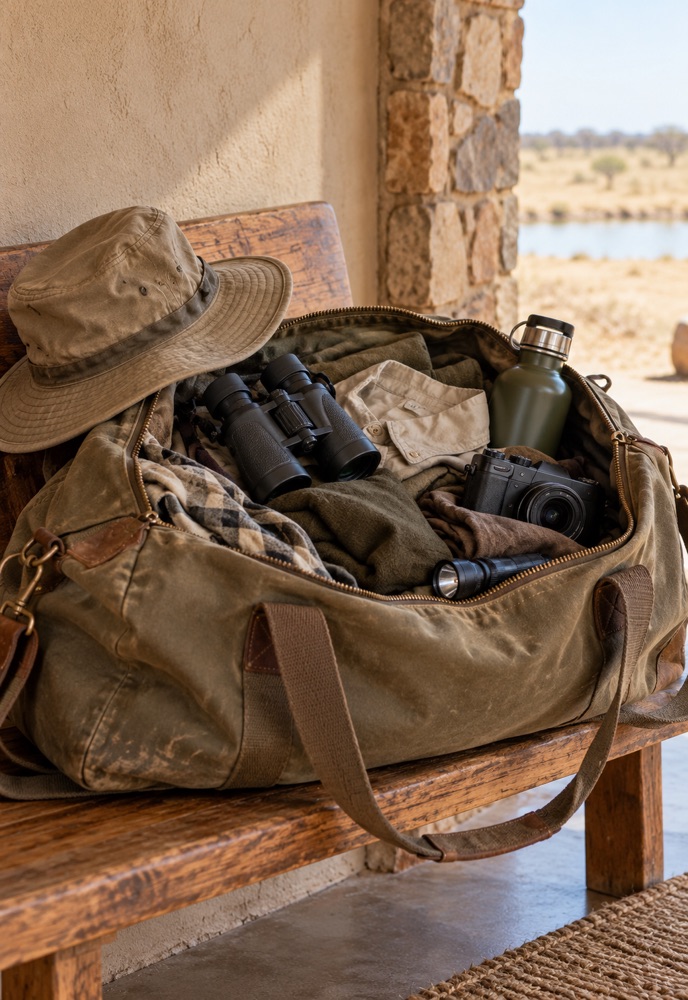
PACKING STRATEGY
Pack by function and accessibility—not by fear of forgetting something
A useful Etosha packing system separates immediate game-drive needs from camp luggage and true emergency reserves. That keeps the vehicle safer and the important items easy to reach.
DAY BAG
Keep frequently used items beside you
Binoculars, water, sun protection, a warm layer, medication, phone, map and camera supplies belong within easy reach. Avoid opening the boot or unpacking luggage at roadside sightings.
MAIN LUGGAGE
Use soft, organised bags where practical
Compact soft-sided luggage is easier to position in a vehicle and around shared transfers. Packing cubes or labelled pouches reduce rummaging and help separate clean clothing, dusty gear and wet items.
DUST & WEATHER
Protect sensitive equipment before conditions change
Use closable bags, lens caps, dry pouches and simple covers. The goal is not to seal everything permanently, but to make protection fast enough that you will actually use it when dust, rain or wind arrives.
BACKUP
Duplicate only what would genuinely stop the trip
Carry sensible reserves of critical medication, water, power and essential documents. Do not duplicate every convenience; excess clutter makes equipment harder to find and increases the chance of leaving something behind.
BEFORE YOU BUY MORE GEAR
Check what your accommodation, vehicle and guided activity already provide
Some stays provide towels, charging points, basic toiletries, drinking water or equipment for specific activities. Rental vehicles may include selected tools or emergency items. Confirm inclusions so you do not carry unnecessary duplicates—or assume something important is supplied.
CLOTHING FOR ETOSHA
Build a small layering system for cold, heat, sun and dust
Neutral, comfortable clothing that can be adjusted during the day is more useful than specialised safari fashion. Focus on protection, breathability and ease of movement.
BASE LAYERS
Choose breathable everyday clothing
Light shirts and trousers work across most conditions and can be layered without bulk. Bring enough for the laundry access and trip length rather than packing a different outfit for every drive.
COLD MORNINGS
Bring one properly warm combination
A wind-resistant jacket, warm mid-layer, long trousers, closed shoes and a beanie or gloves can transform an early drive. Sitting still beside an open window feels colder than walking outside at the same temperature.
HOT DAYS
Protect skin while allowing airflow
Loose long sleeves, lightweight trousers, a secure brimmed hat and breathable fabrics reduce sun exposure. Very short or tight clothing may be uncomfortable against hot seats, dust and repeated sun.
RAINY PERIODS
Pack compact protection, not a heavy expedition shell
A lightweight waterproof or quick-drying outer layer is usually more versatile than bulky rain gear. Include a small dry bag for electronics and one change of clothing that remains protected.
FOOTWEAR
Prioritise comfort and secure footing
Comfortable closed shoes handle camp paths, dust and cool mornings. Sandals can be useful around accommodation, but footwear should suit any planned walks or activities and remain easy to manage inside the vehicle.
COLOUR & PRACTICALITY
Use muted colours and fabrics that tolerate dust
Neutral shades are easy to wear repeatedly and are less visually distracting. Avoid relying on delicate fabrics or clothing that only looks acceptable when perfectly clean; Etosha dust becomes part of the experience.
THE GAME-DRIVE DAY BAG
Keep the day’s essentials accessible from your seat
The best day bag is compact enough to stay out of the way but organised enough that you can reach an item quietly without missing a sighting.
DRINKING WATER
Carry a personal bottle plus a reserve
Use a bottle that can be opened quietly and fits safely in the vehicle. Keep additional water secured away from direct sun, and refill before departure rather than assuming the next stop will solve the problem.
BINOCULARS
Give every observer a fair view
A comfortable pair of binoculars is often more useful than a camera. Adjust the focus before the drive, use a secure strap and keep the lenses capped or covered while travelling through heavy dust.
SUN & LAYERS
Prepare for both ends of the temperature range
Keep sunscreen, sunglasses, a secure hat and a warm layer in the day bag even if the conditions at departure seem mild. Weather and exposure can change during a long loop.
MAP & TIMING
Carry an offline route reference
Use a paper or downloaded map, note the relevant return gate or camp and keep a simple time check. Mobile coverage and live navigation should never be the only way you understand the route.
CAMERA SUPPORT
Pack only what you can operate safely
Bring spare batteries, memory, a lens cloth and a stable support such as a beanbag if useful. Keep loose equipment away from pedals and avoid switching lenses unnecessarily in dusty conditions.
SMALL COMFORTS
Solve minor discomfort before it becomes a distraction
Lip balm, tissues, hand-cleaning supplies, a small rubbish bag and any essential personal items make long drives easier. Store scented food and waste securely rather than leaving it open inside the vehicle.
PACK THE BAG THE NIGHT BEFORE
A quiet departure creates a better first hour
Charge equipment, refill water, clean windows and place the day bag in the vehicle before the early start. This avoids searching in the dark, disturbing other guests and discovering that a critical item is still in the room after departure.
HEALTH & PERSONAL CARE
Bring personal essentials that may be difficult to replace quickly
Etosha is not the place to discover that a prescription, allergy item or preferred personal-care product was left behind. Prepare these items deliberately and obtain professional advice appropriate to you.
MEDICATION
Carry enough, plus a sensible delay reserve
Keep essential medication in original labelled packaging where practical and split critical supplies between secure locations. Bring copies of prescriptions or supporting documentation where relevant to international travel.
FIRST AID
Pack a compact kit you understand
Include supplies for minor cuts, blisters, discomfort and the personal conditions you are prepared to manage. A kit is not a substitute for medical assessment; know how you would seek help for anything serious.
HYDRATION
Make regular drinking easy
Carry water where it is visible and accessible rather than buried under luggage. Travellers with specific medical needs should ask a qualified professional about hydration or electrolyte products before using them.
INSECTS
Use season-appropriate protection
Repellent, long light clothing and careful use of screens can improve comfort, especially in warmer or wetter conditions. Obtain current travel-health advice for preventive medication and individual risks.
SKIN & EYES
Plan for sun, wind and dry air
Sunscreen, sunglasses, lip balm and moisturiser are small but useful. People who wear contact lenses may want glasses available because dust and dry air can make lenses uncomfortable.
INSURANCE & CONTACTS
Know what happens if plans go wrong
Keep policy details, emergency assistance numbers, allergies and essential medical information accessible offline. Confirm that the cover suits the activities, destinations and transport included in your trip.
POWER, OPTICS & PHOTOGRAPHY
Build a charging and protection system you can manage every evening
A simple, labelled setup prevents the familiar safari problem of carrying excellent equipment with flat batteries, full memory cards or the wrong cable.
ADAPTERS
Confirm the plugs and power available
Check the socket types, voltage compatibility and charging facilities at each stay. Bring a reputable adapter and compact charging hub only if they suit the equipment and accommodation you will actually use.
BATTERIES
Carry charged spares for critical devices
Camera, phone and torch batteries should be rotated and labelled. Keep lithium batteries protected from short circuits and pack them according to the current rules of your airline and transport providers.
POWER BANKS
Use reserve power for essential devices
A quality power bank can support navigation, communication and small electronics during transfers. Charge it whenever dependable power is available and follow all airline restrictions for carrying it.
MEMORY & BACKUP
Separate capture from storage risk
Bring more than one memory card and avoid placing every image on a single device. If photographs are important, create a simple backup routine and keep the backup separate from the primary camera bag.
DUST & RAIN
Protect gear before opening the door or window
Use a closable camera bag, blower and appropriate cleaning cloth. Change lenses as little as practical in dusty conditions, and carry a waterproof liner or dry bag during the rainy period.
BINOCULARS
Choose comfort over extreme magnification
Binoculars should be easy to hold, quick to focus and comfortable for extended viewing. A secure strap and protective caps matter more in daily use than specifications that make the optics heavy or difficult to steady.
FOOD, WATER & SELF-CATERING
Buy with the itinerary, storage and accommodation in mind
Supply needs differ between catered lodges, camp restaurants and self-catering accommodation. Confirm facilities before shopping and avoid filling the vehicle with food you cannot store safely.
DRINKING WATER
Decide how you will refill before entering
Confirm local guidance and your own taste preferences, then carry a reliable supply and refill containers responsibly. Keep an emergency reserve separate from the bottle being used during the day.
MEAL PLAN
Match quantities to nights and facilities
Check whether the stay includes meals, has a shop, provides refrigeration or offers cooking equipment. Plan simple meals around the actual facilities rather than assuming every camp or lodge works the same way.
COOL STORAGE
Protect food from heat and repeated opening
A cooler is useful only when ice, power or refrigeration supports it. Separate drinks from more temperature-sensitive food where possible so frequent access does not warm everything.
DRIVE SNACKS
Choose quiet, stable and low-mess options
Pack snacks that tolerate heat, can be eaten without distracting the driver and do not create strong smells or loose wrappers. Keep food closed around wildlife and never feed animals.
WASTE
Carry a sealable rubbish system
Use sturdy bags or containers for wrappers and food waste until proper disposal is available. Nothing should leave the vehicle at a sighting, waterhole or roadside stop.
LAST SHOP
Restock before the final approach
Larger towns on the wider route generally offer more choice than small park shops or remote stops, but availability changes. Make a list, confirm operating times and buy essentials before the itinerary becomes time-sensitive.
VEHICLE & ROAD KIT
Prepare the vehicle for distance, dust and slower roads
The exact kit depends on whether the vehicle is owned, rented or driven by a guide. Confirm what is supplied and know how to use any equipment you carry.
TYRES
Inspect the spare and the equipment needed to fit it
A spare tyre is only useful if it is serviceable and the jack, wheel tool and access method suit the vehicle. Ask the rental company to demonstrate anything unfamiliar before departure.
PRESSURE
Carry a reliable gauge where appropriate
Tyre pressure affects handling, wear and comfort, but the correct setting depends on the vehicle, load, tyre and road. Follow manufacturer or rental guidance rather than copying another traveller’s number.
FUEL
Plan range conservatively
Start important driving days with adequate fuel and avoid treating the final available stop as the preferred plan. Allow for detours, slow wildlife viewing and changes to the wider route.
BASIC SAFETY
Know what the vehicle includes
Check for warning equipment, a torch, first-aid supplies and the manufacturer’s tools. Add only equipment that is permitted, suited to the journey and familiar enough to use safely.
VISIBILITY
Pack cleaning supplies for glass and lights
Dust, insects and mud can reduce visibility surprisingly quickly. A small amount of suitable cleaner, water and a cloth or squeegee makes early-morning and low-light driving safer.
LOAD SECURITY
Keep loose items away from controls and windows
Bottles, lenses, bags and charging cables should not roll beneath pedals or become projectiles under braking. Secure luggage and preserve a clear view through the vehicle.
RENTAL VEHICLE HANDOVER
Photograph the condition and test the essentials before leaving
Check tyres, spare access, fuel type, warning lights, locking, air conditioning, charging ports and emergency contacts. Resolve uncertainties at the handover location rather than beside a remote road.
DOCUMENTS, MONEY & CONNECTIVITY
Keep the trip functional when mobile data is unavailable
Important information should exist in more than one form. A charged phone is useful, but it is not a complete document, navigation or payment strategy.
IDENTIFICATION
Carry the documents required for your journey
Check passport validity, driving-licence requirements, rental documentation and any cross-border paperwork well before departure. Store secure copies separately from the originals.
RESERVATIONS
Save every essential confirmation offline
Accommodation, activity, vehicle and transfer details should be downloadable or printed. Include addresses, arrival instructions, reference numbers and contact details rather than relying on an email inbox.
INSURANCE
Bring policy and assistance information
Keep the policy number, emergency telephone numbers and the procedure for opening a case. Confirm the scope of cover before travelling, including rental vehicles and planned activities where relevant.
PAYMENTS
Use more than one payment method
Cards may be widely useful, but terminals, networks or individual facilities can fail. Carry an appropriate backup without keeping every card or all cash in one wallet.
CONNECTIVITY
Use a local or roaming option as a tool, not a guarantee
A suitable mobile plan can help with coordination and updates, but coverage varies. Download maps, bookings and key contacts before entering areas where the signal may be weak or absent.
EMERGENCY DETAILS
Create one compact offline reference
Include accommodation contacts, vehicle assistance, insurance, relevant emergency numbers, medical information and a trusted contact at home. Make sure more than one traveller knows where it is stored.
COMMON PACKING MISTAKES
Six avoidable problems that make the safari harder
Most packing problems come from access, duplication or assumptions—not from leaving behind a specialist gadget.
OVERPACKING
Filling the vehicle with ‘just in case’ items
Excess luggage reduces visibility, complicates transfers and makes critical gear harder to locate. Pack for confirmed activities and realistic conditions, then remove duplicates that do not solve a meaningful risk.
POOR ACCESS
Putting water, layers or medication in the boot
Items needed during the drive belong inside the passenger area, safely secured. Plan the day bag before loading the main luggage so it does not become trapped beneath everything else.
ONE POWER PATH
Depending on a single cable, socket or battery
A damaged cable or unavailable socket should not disable communication or photography. Carry a small, tested backup for essential devices without bringing an entire electronics drawer.
LOOSE GEAR
Allowing bottles and equipment to roll around
Unsecured objects create noise, distraction and a safety hazard. Give every frequently used item a stable place before the vehicle moves.
SEASONAL ASSUMPTIONS
Packing only for the expected daytime temperature
Cold early starts, hot afternoons, wind and local storms can occur within the same trip. Layers and compact weather protection are useful even when the general forecast looks simple.
UNVERIFIED SUPPLIES
Assuming the next shop will stock a specific essential
Remote availability, product choice and operating hours vary. Buy critical personal items, medication and specialised supplies before they become urgent.
FINAL PACKING CHECKLIST
The essentials to confirm before departure
Use this as a final audit after adapting the detailed sections to your season, accommodation, transport and personal needs.
Etosha packing essentials
✓ Breathable clothing plus a warm, wind-resistant layer.
✓ Closed shoes, sun hat, sunglasses and sunscreen.
✓ Drinking water, refill plan and emergency reserve.
✓ Essential medication, compact first-aid kit and health documents.
✓ Binoculars, camera supplies and dust protection.
✓ Chargers, suitable adapters, spare batteries and power bank.
✓ Offline maps, bookings, contacts and emergency details.
✓ Identification, driving documents and insurance information.
✓ More than one appropriate payment method.
✓ Confirmed meal, water, refrigeration and shopping plan.
✓ Checked spare tyre, tools, fuel plan and vehicle contacts.
✓ A compact game-drive bag packed before the early start.
ETOSHA PACKING FAQ
Practical answers before you close the suitcase
The final list depends on your transport, season and accommodation. These answers help resolve the decisions most travellers face.
How much luggage should I take to Etosha?
Take the smallest practical amount that fits your trip and transport arrangements. Soft-sided bags are often easier to position in vehicles, while organised pouches reduce unpacking. Always follow the strictest luggage limit set by any flight, transfer or guided activity in the itinerary.
What clothes should I wear on an Etosha safari?
Wear comfortable, breathable layers in muted colours. Include long sleeves, trousers, sun protection and a properly warm layer for cold morning drives. Add compact rain protection during changeable or rainy periods.
Do I need a sleeping bag or camping equipment?
Not for ordinary lodge or equipped accommodation unless the property or itinerary specifically requires it. Campers should confirm exactly what the campsite and rental setup provide before packing any specialised equipment.
Can I buy food and basic supplies near Etosha?
Basic supplies may be available at some camps, shops and towns on the wider route, but stock and operating hours vary. Buy medication, specialised products and important self-catering supplies before they become urgent.
Should I pack drinking water?
Yes. Carry a reliable personal supply and an additional reserve appropriate to the route and weather. Ask each accommodation for current local guidance and refill options rather than making a blanket assumption about every tap or facility.
Are binoculars necessary?
They are strongly recommended. Binoculars let you observe behaviour, identify birds and enjoy distant animals without seeking a closer position. They are particularly valuable for passengers who are not using a camera.
Do I need cash if I have bank cards?
Cards can be useful, but terminals and communications can fail and not every small purchase works the same way. Carry an appropriate backup payment method and store it separately without travelling with unnecessary amounts.
Can I bring or use a drone in Etosha?
Do not assume that possession or use is permitted. Drone rules involve park management, aviation requirements, wildlife disturbance and other restrictions. Confirm the current official requirements before travelling, and leave it behind unless every necessary permission is clear.
PACK FOR THE ITINERARY YOU ARE ACTUALLY TAKING
Choose the accommodation, confirm what is provided and refine the list
A lodge stay, a self-catering camp and a guided fly-in safari require different luggage. Build the route first, check every inclusion and ask for help if transport limits or remote stays make the packing plan unclear.